Olive growing: Urea and other nitrogen fertilizers
Dec. 16, 2025
Starting January 1st, non-EU producers (whose sources account for almost all nitrogen fertilizers) will also be required to pay "carbon credits" to offset their emissions. This will inevitably lead to price increases. The initial estimates are worrying, here they are!
As is well known, European producers are already required to annually offset their CO₂ emissions by purchasing carbon credits through the EU Emissions Trading System (ETS). With these new provisions, the purchasing obligation is also extended to non-EU producers. This decision also helps combat the phenomenon of indirect carbon leakage , the risk that European companies, to avoid ETS costs, relocate production to non-EU countries with less stringent environmental standards and lower costs, thus undermining Europe's climate efforts.
In this ongoing witch hunt, the ones who will pay the price are farmers, including olive growers.
 This mechanism, in fact, imposes a cost on imports of carbon-intensive products (including, starting this year, fertilizers) equivalent to that already borne by European producers under the ETS . European fertilizer importers from non-EU countries will therefore be required to purchase CBAM certificates in quantities equal to the CO₂ emissions embodied in the imported product. The price of these certificates will be aligned with the weekly average price of ETS allowances. A complex mechanism, but with very clear effects: increasing the cost of the finished product .
Although the transition phase began in 2023, importers' financial obligations will begin on January 1, 2026, with the progressive elimination of the free ETS quotas that had been foreseen for certain types of European production.
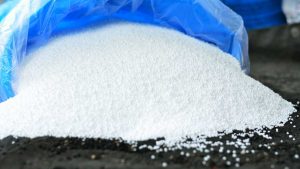
There is still uncertainty about the final calculation, but estimates from industry operators indicate a significant impact , which will inevitably be passed on to farmers. For urea , one of the most common and imported nitrogen fertilizers, price increases are estimated to reach as much as 50 euros per ton . For NP (nitrogen-phosphorus)-based fertilizers , the increase could vary between 20 and 40 euros per ton , calculated on the nitrogen quota. These are estimates that obviously all need to be confirmed , as there are no official communications yet.
 This will certainly be an increase that adds to an already critical situation : fertilizers already represent a significant share of agricultural production costs, with prices having almost doubled since the beginning of the conflict in Ukraine and further increases due to recent tariffs on imports from Russia and Belarus.
The real risk is that many olive growers will ultimately give up purchasing fertilizers for their groves, unable to sustain such high costs. And certainly—this time, there's no need for estimates—without fertilizers, olive production will inevitably decline, and with it, farm profitability. Conversely, imports of olive oil from abroad will increase. This is in defiance of the recognition of Cucina Italia as a UNESCO World Heritage Site and the important role of Italian extra virgin olive oil in contributing to this achievement.